How to Stay on Track When Everyone Around You Is Eating Like It’s Christmas
You have been doing so well. You have your meals prepped. You are hitting your protein. You are finally in a rhythm. And then your partner walks in with a family-sized bag of chips and parks themselves on the couch next to you.
Or you go to a family barbecue and everyone is piling their plates high while you are trying to make sensible choices. Or it is Friday night drinks with the girls and suddenly your grilled chicken salad feels like the loneliest meal on the planet.
This is one of the most common challenges I hear from my clients. Not the training. Not the nutrition plan itself. It is the people around them eating in a completely different way to what they are trying to do. And it can quietly undo weeks of progress if you do not have a strategy for it.
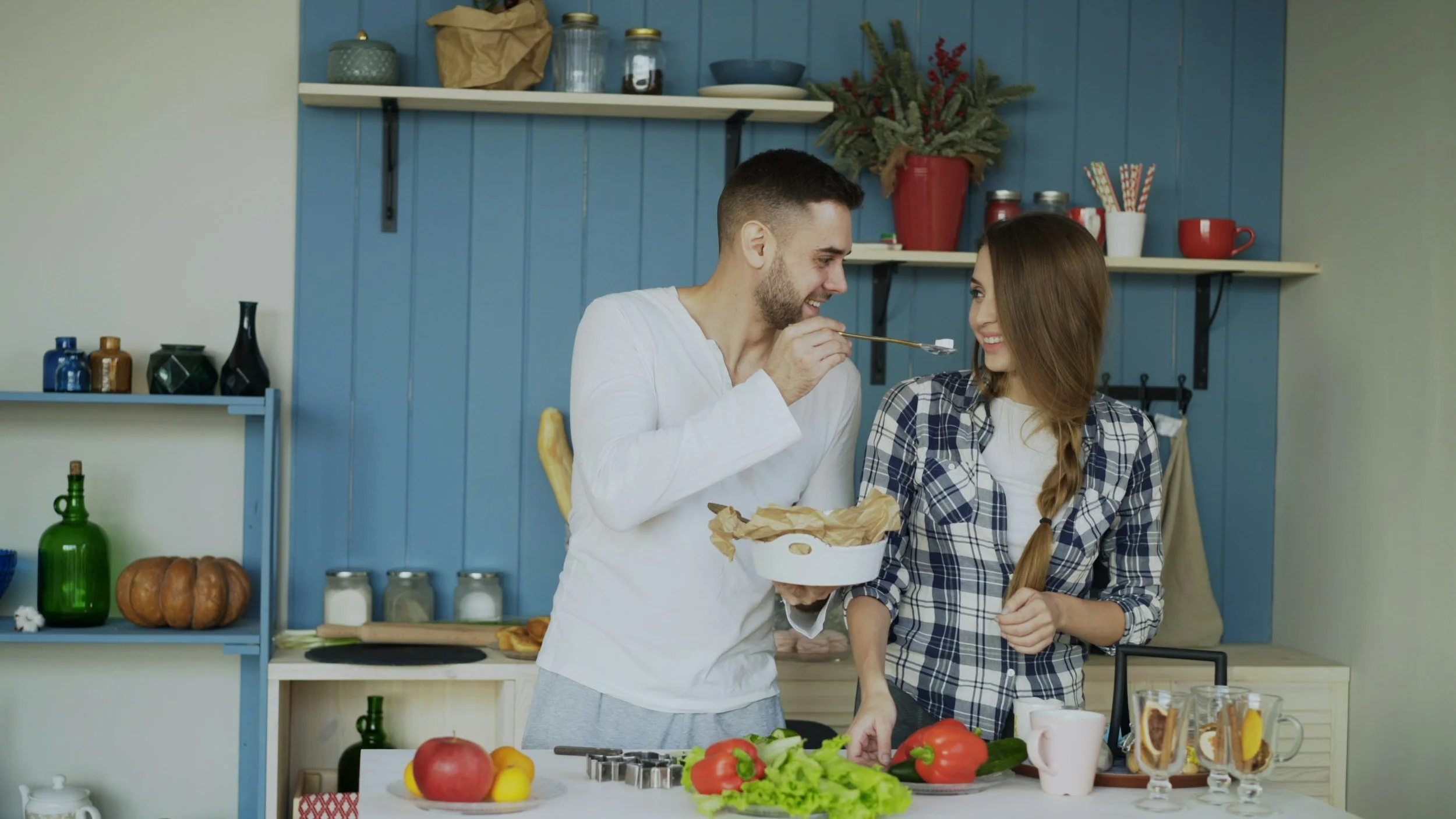
Why This Is Harder Than People Think
The standard advice you will hear is to just use willpower. Sit there surrounded by food you are trying to avoid and simply choose not to eat it. As if that is a sustainable long-term strategy.
It is not. Willpower is a finite resource. And relying on it in high-pressure social situations, when you are tired, when you are emotionally invested in the people around you, is setting yourself up to fail. The real skill is not white-knuckling your way through every meal. It is having a plan before you walk into the situation.
The Moral High Ground Approach (And Why It Only Works Half the Time)
The textbook answer is to sit down with the people around you and explain what you are trying to do. Tell your partner, your family, your friends that you are working on your health and nutrition, and ask for their support.
And in a perfect world, they would rally around you. They would stop buying junk food. They would suggest healthier restaurants. They would cheer you on.
In my experience, that happens about fifty percent of the time. The other fifty percent? You get eye rolls. You get comments like “you are no fun anymore” or “one piece of cake is not going to kill you.” You get passive-aggressive snacking right in front of you. Sometimes the people closest to you are the least supportive, and it is not always because they are being unkind. Sometimes your changes make them uncomfortable about their own choices.
So yes, have the conversation if you feel comfortable. But also have a backup plan for when the support does not come.
Sneaky Strategies That Actually Work
Here is where I get practical, because this really is context dependent. There is no single answer that works for every situation. But here are the strategies I give my clients that consistently make a difference.
Get your protein in before the event. If you know you are heading to a barbecue, a dinner party, or a social gathering where the food options are going to be limited, eat your protein beforehand. This does two things. It takes the edge off your hunger so you are not arriving starving and grabbing the first thing you see. And it means you have already hit your most important nutritional target for the day, so whatever you eat at the event is a bonus rather than a disaster.
Do not make a big deal out of it. You do not need to announce to the table that you are on a diet. You do not need to explain why you are not having the garlic bread. Just quietly make your choices and move on. The less attention you draw to what you are or are not eating, the less ammunition you give people to comment on it. Most of the time, nobody actually notices what is on your plate unless you point it out.
Bring your own food if it does not bother you. Some people are perfectly comfortable bringing a container of prepped food to a gathering. If that is you, go for it. If the idea of pulling out Tupperware at a dinner party makes you want to crawl under the table, then skip this one and use a different strategy. There is no point winning the nutrition battle if you are miserable doing it.
Eat your own meals at the same time as your partner. This one is for the couch scenario. Your partner is sitting down with a bowl of chips or ordering Uber Eats. Instead of sitting there with nothing and trying to pretend you are fine, make yourself something you enjoy that fits your plan and eat it at the same time. You are still sharing the moment together. You are just eating something different. It takes the deprivation out of it.
The Partner Problem
I want to talk about this specifically because it is the number one version of this challenge that comes up with my clients. It is rarely the one-off barbecue that derails someone. It is the daily, relentless exposure to a partner who eats completely differently.
They are ordering takeaway three times a week. They keep the pantry stocked with biscuits and chocolate. They have a beer every night. And there you are, trying to eat chicken and vegetables while the smell of pizza fills the house.
You cannot control what your partner eats. Full stop. But you can control how you respond to it. And the biggest shift my clients make is moving from “I cannot do this because of my partner” to “I need to find a way to do this alongside my partner.” Those are two very different mindsets.
The Secret Is Being Planned, Not Perfect
The single biggest thing you can do is go into every social eating situation with a strategy. Not a rigid meal plan. Not a list of banned foods. Just a simple plan for how you are going to navigate it.
Ask yourself before you get there: What am I going to eat? Have I already hit my protein? Am I going to drink alcohol, and if so, how much? What am I going to say if someone pushes food on me?
When you have thought about it in advance, the decisions become easier in the moment. You are not scrambling. You are not relying on willpower. You are just executing a plan you have already made when your head was clear and your motivation was high.
Navigating the Judgement
I will be honest with you. Even when you have your strategies sorted, you will still face judgement from people at times. I have experienced it myself. My husband also competes and my family has become used to how I eat now, but it took a while to get there. There was a period of navigating comments, raised eyebrows, and people who thought I was being extreme or difficult.
Here is what I learned. You do not owe anyone an explanation for how you choose to eat. But you also do not need to make it a battlefield. The quieter you are about your changes, the less resistance you tend to get. Let your results do the talking. Eventually, the same people who judged you will be asking you what you have been doing differently.
Staying on Track Does Not Mean Being Perfect
I want to make something really clear. Staying on track does not mean eating perfectly at every meal, in every situation, no matter what. That is not realistic and it is not healthy.
Staying on track means making mostly good decisions, most of the time, and not letting one meal or one night derail your entire week. It means having the barbecue burger but maybe skipping the second round of dessert. It means enjoying a glass of wine at dinner without writing off the whole weekend.
The goal is progress, not isolation. You should still be able to enjoy your life, eat with the people you love, and feel like a normal human being. You just need a few strategies in your back pocket so that you are making decisions rather than being swept along by whatever is in front of you.
If you are struggling to stay consistent because of the people and situations around you, I can help you build a plan that works with your real life, not against it. Book a free discovery call and let us figure out what that looks like for you.